
Dental Referral Letters: How to Write Them Faster (and Automate Them)

Key takeaways
- A complete referral letter covers the reason for referral, relevant history, clinical findings, treatment already attempted, and urgency.
- The specialist's most common complaint isn't style – it's missing clinical data that forces callbacks.
- Structured templates make letters faster; automation makes them instant.
- Denti.AI Scribe auto-generates referral letters from the visit, with patient history, findings, and needs pre-filled in a structured format.
What the specialist actually needs from you
Ask any endodontist or oral surgeon what they want in a referral, and the answer is consistent: the clinical picture, not the pleasantries.
- Reason for referral, specific. "Evaluate #19 for RCT – symptomatic irreversible pulpitis, unable to isolate MB canal" beats "endo eval" by a week of phone tag.
- Relevant history. Medical conditions, anticoagulants and bisphosphonates, allergies, and the dental history of the tooth in question.
- Objective findings. Your test results – percussion, palpation, cold, mobility, probing depths around the tooth – plus radiographs attached, not "available on request."
- Treatment already attempted. What you did and how the tooth responded; the specialist shouldn't repeat your steps.
- Urgency and expectations. Routine or urgent, and whether you want the patient back for the restoration or the specialist to complete care.
Missing any of these generates the callback loop that delays care – and the incomplete-referral reputation that quietly affects how quickly your patients get seen.
A copyable referral letter structure
Date: ___
To: Dr. ___ (specialty)
Re: [Patient name, DOB]

Reason for referral: ___ (tooth #, provisional diagnosis, specific request)

Relevant medical history: ___ (conditions, medications incl.
anticoagulants/bisphosphonates, allergies)

Clinical findings: ___ (symptoms, test results, probing where relevant)
Radiographs: ___ (attached – type and date)

Treatment to date: ___ (what was done, response)

Urgency: [ ] Routine  [ ] Urgent – ___
Post-treatment: [ ] Return to our office for restoration
                [ ] Please complete definitive care

Thank you for seeing [patient]. Please send your findings and
treatment summary. Contact me directly with any questions.

Dr. ___ / Practice ___ / Phone ___
Pair it with the matching clinical documentation – the dental note template library covers the visit-note side of every referral scenario, and the treatment plan template handles the sequencing conversation that referrals often trigger.
The automation step: letters that write themselves
Here's the structural insight: everything a referral letter needs was already said out loud during the visit. The findings were discussed, the history reviewed, the reason for referral explained to the patient. The letter is a re-typing exercise – which is exactly the kind of work AI should absorb.
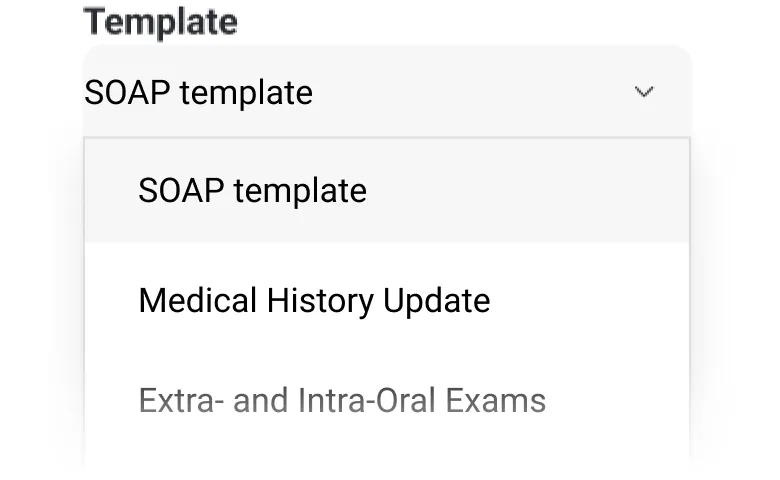
Denti.AI Scribe generates referral letters directly from visit context: patient history, diagnostic findings, and treatment needs auto-fill into a structured letter format – date, recipient header, patient identifiers, itemized findings – ready for your review and signature. The same engine that writes the clinical note writes the letter, so the two never disagree with each other, and both land in your PMS attached to the patient record.
For a GP practice referring a few cases a week, that's an hour or two returned. For group practices, it's also consistency: every letter leaving any location carries the same complete structure, which is exactly the kind of standardization DSO clinical leaders chase.
Writing tips when you do write manually
Lead with the request, not the biography – the specialist triages by the first line. Use tooth numbers everywhere; "upper left molar" invites wrong-tooth confusion. Attach the radiograph rather than describing it. State the anticoagulant status even when negative – it's the first thing a surgeon checks. And close the loop: a referral without a documented follow-up plan in your own chart is a patient who can fall between practices, which is a records-request story waiting to happen.
FAQ
What should a dental referral letter include?
Reason for referral with tooth number and provisional diagnosis, relevant medical and dental history, objective findings with radiographs attached, treatment already attempted, urgency, and post-treatment expectations.
How long should a referral letter be?
One page. Specialists read structure, not prose – a complete half-page beats two pages of narrative.
Can AI really write referral letters?
From a documented visit, yes – Denti.AI Scribe assembles the letter from the same captured context as the clinical note, with the provider reviewing and signing. The judgment stays yours; the typing doesn't.
The referral letter was said out loud already – let it write itself
Book a free demo of Denti.AI Scribe and watch a visit produce its own referral.

Shelly Mendoza is a results-driven executive with 25+ years in the dental industry. Starting as a dental assistant, she brings deep clinical and operational insight to every leadership role. She has led multi-site DSO operations, implemented scalable systems, and earned multiple President’s Club honors. Shelly is passionate about workflow solutions that boost team efficiency and elevate the patient experience.

