

Dental AI for DSOs: a practical guide to scaling quality care
Dental AI is changing that equation. But not all AI is built for the realities of multi-location operations. This guide breaks down what DSO leaders should look for in a dental AI platform – and how Denti.AI is purpose-built to solve the problems that matter most at scale.
The DSO documentation problem is a revenue problem
Clinical documentation is rarely treated as a strategic priority – until you calculate what it costs. Manual periodontal charting alone can consume 10–15 minutes per patient when factoring in assistant coordination, data entry, and error correction. Multiply that across hundreds of dentists and hygienists, thousands of appointments per week, and dozens of locations, and you’re looking at thousands of lost clinical hours every month.
The downstream effects compound. Incomplete charting leads to missed treatment opportunities. Inconsistent documentation creates compliance risk. And when clinical notes pile up at the end of the day, staff burnout follows. For DSOs, these aren’t isolated workflow annoyances – they’re systemic drags on revenue, retention, and care quality.
What makes dental AI different for DSOs
Most dental AI tools were designed for individual practices. They solve one problem – typically diagnostic imaging – and leave everything else untouched. DSOs need something different: a platform that addresses multiple clinical bottlenecks simultaneously, integrates into existing practice management systems, and delivers measurable results from the first week.
That means looking beyond imaging-only AI and evaluating platforms on three criteria: workflow automation (does it reduce hands-on documentation time?), diagnostic support (does it catch what clinicians might miss?), and scalability (can it deploy across 50 locations as easily as five?).
How Denti.AI addresses each layer
Voice Perio. Denti.AI’s voice-activated periodontal charting eliminates the need for a dedicated charting assistant. Hygienists speak measurements directly into the system, completing a full perio exam in under five minutes. Over one million charts have been completed on the platform, with 96% clinician adoption achieved after just three training sessions. For DSOs, that means faster rollouts with minimal disruption to daily operations.
Denti.AI Scribe. Clinical notes are generated automatically from chairside conversations – no after-hours documentation required. The scribe supports over 50 languages, making it practical for diverse clinical teams. Notes populate directly into your PMS, reducing clicks and keeping providers focused on patient care rather than paperwork.
Denti.AI Detect. FDA 510(k)-cleared radiographic analysis identifies caries, bone loss, and periapical lesions in real time. For DSOs looking to standardize diagnostic quality across locations, Detect provides an objective, consistent second set of eyes on every X-ray.
Auto-Chart 2. Denti.AI’s patented technology layers voice capture onto radiographic AI analysis, combining two workflows into one. Instead of toggling between imaging software and charting systems, clinicians get an integrated experience that surfaces findings and populates records simultaneously.
Results DSOs are seeing
Three of the top ten U.S. DSOs – including Aspen Dental, Mortenson Dental Partners, and Guardian Dentistry – have deployed Denti.AI across their networks. The results speak to both clinical and financial impact: practices report a 10% revenue lift driven by faster appointment throughput and more complete treatment identification. Near-zero customer churn post-implementation suggests that once teams experience the workflow, they don’t go back.
For operations leaders, the adoption curve matters as much as the outcome metrics. A tool that requires months of change management is a non-starter at scale. Denti.AI’s three-session adoption timeline means new locations can be live within days, not quarters.And unlike many AI tools that stop at the chair, Denti.AI provides centralized dashboards that give clinical and operations leaders visibility into performance, utilization, and treatment trends across every location, making it possible to track ROI and identify coaching opportunities without relying on manual reporting.
%201%20(2).png)
Choosing the right dental AI partner
Not every AI vendor is equipped to serve DSOs. When evaluating platforms, consider these questions: Does the platform address multiple workflow pain points, or only imaging? Is it FDA-cleared for diagnostic use? Can it integrate with your existing PMS without custom development? And critically – does the vendor have proven experience deploying across multi-location networks?
Dental AI is moving fast, and the gap between early adopters and everyone else is widening. DSOs that invest in the right platform now will compound their advantage in clinical quality, staff satisfaction, and revenue performance across every location they operate.

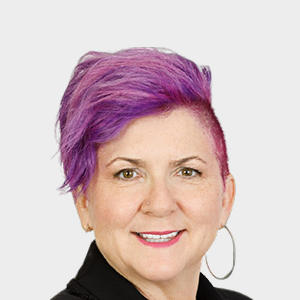
Shelly Mendoza is a results-driven executive with 25+ years in the dental industry. Starting as a dental assistant, she brings deep clinical and operational insight to every leadership role. She has led multi-site DSO operations, implemented scalable systems, and earned multiple President’s Club honors. Shelly is passionate about workflow solutions that boost team efficiency and elevate the patient experience.

